
Lancelot Ribeiro

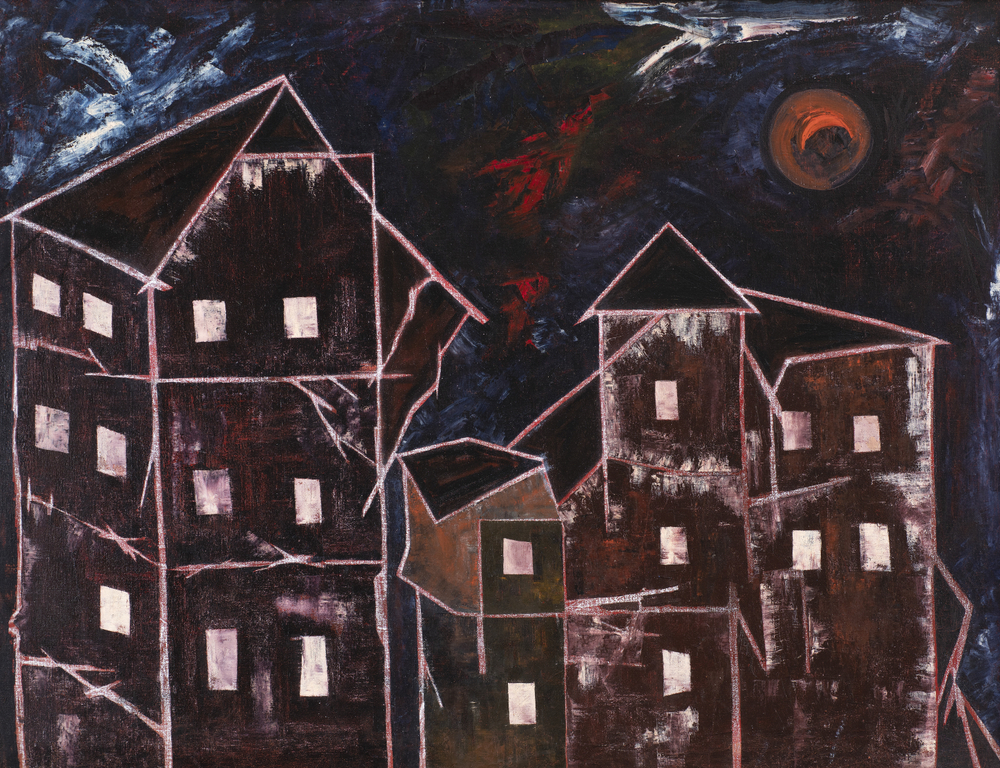
Phillips sat down with Marsha Ribeiro to discuss our selection of South Asian works being presented in the Modern & Contemporary Art sale on 7 March. Marsha curated the Lancelot Ribeiro: A Risen Voice Symposium on her father’s legacy at the Victoria and Albert Museum and collaborated on the new edition of Lancelot Ribeiro: An Artist in India and Europe, published by Francis Boutle Publishers. She is the custodian of the Ribeiro Collection, dedicated to documenting her father’s practice. She has conceived exhibitions, special events, publications, and talks in the UK, US, and India, collaborating with museums, galleries, and educational institutions. The following is an excerpt from the conversation.
Did your father have a relationship with any of the South Asian artists we are presenting in the auction?
M.F. Husain is a painter who had a close connection to my father. He [Husain] would regularly meet his [Ribeiro’s] brother [F. N.] Souza at the family home in Hira Building in then-Bombay. Husain’s name often crops up in family correspondence. In one, my grandmother, Lily, wrote that Husain offered to help her bring items from India to her artist sons in 1950s London.
Husain was known to favor going around barefoot — [grandmother Lily] wrote to my teenage father: "Mr. Husain [sic] who was good enough to come over & ask us if we were sending any articles he would willingly take… If you are in want of shoes just send your exact paper cutting of the outside of your shoe sole… I am sending you some mango sweet (mangade) with Husain."
— Marsha Ribeiro
My father’s path would cross with M.F. Husain and Ram Kumar again in 1966, when they were among 11 contemporary artists exhibiting at the Towner Art Gallery in Eastbourne.
What immediately struck me in M.F. Husain’s Untitled (Galloping Horse) was the way movement is conveyed through energized brushstrokes. There is a Cubist touch to the contorted, somewhat agitated pose of the subject, perhaps trying to flee from some unknown threat.
Ram Kumar’s work intrigued me, and I found my eye immediately drawn to the jagged contours of a landscape. The thick impasto and a fiery array of color suggest to me an active landscape, carved out by geological forces that come through in the sheer scale of the piece. Carved valleys, erratic rocks, and weather-beaten trees are brought into sharp focus against a pale, muted sky.