


Rachid KoraÏchi

Lancelot Ribeiro, Revolving Off Centre, 1969, Liquid acetate and collage on canvas, 56 ⅓ x 56 ⅓ in (143 x 143 cm)
RIBLA037

Lancelot Ribeiro, Untitled (Tantric), c. 1969, Oil and polyvinyl acetate on canvas, 42 x 32 ½ in (106.5 x 82.5 cm)
RIBLA039

Lancelot Ribeiro, Untitled (Tantric), c. 1966-67, Oil and polyvinyl acetate on canvas, 47 ⅝ x 35 ⅝ in (121 x 90.5 cm)
RIBLA040

Lancelot Ribeiro, Untitled (Abstract), c. 1969, Oil and polyvinyl acetate on canvas, 19 ½ x 19 ½ in (49.5 x 49.5 cm)
RIBLA045

Lancelot Ribeiro, Untitled (Tantric), 1966-67, Oil and PVA on canvas, 34 ¼ x 32 ⅝ in (87 x 83 cm)
RIBLA049

Lancelot Ribeiro, Untitled (Tantric), c.1969-70, Oil, polyvinyl acetate, metallic paint, and plastic collage on canvas, 35 ¼ x 23 ⅚ in (89.5 x 60 cm)
RIBLA044

Ghulam Rasool Santosh, Untitled (Red Tantra Square, Green Background), n/d, Oil on canvas, 39 ⅗ x 49 ⅞ in (100.7 x 125.7 cm)
SANGR062

Ghulam Rasool Santosh, Untitled (White, Diety), 1969, Oil on canvas, 50 x 36 in (127 x 91.4 cm)
SANGR063

Ghulam Rasool Santosh, Divine Energy, 1993, Oil on canvas, 45 x 39 in (114.3 x 99.1 cm)
SANGR064

Ghulam Rasool Santosh, Untitled 29, n/d, Serigragh, 25 x 19 in (63.5 x 48.3 cm)
SANGR041

Ghulam Rasool Santosh, Untitled 28, n/d, Serigraph, 24 x 18 in (61 x 45.7 cm)
SANGR040

Ghulam Rasool Santosh, Untitled, n/d, Serigraph, 8 x 6 in (20.3 x 15.2 cm)
SANGR061.2

Ghulam Rasool Santosh, Untitled (Union trident moon), n/d, Ink on paper, 11 ½ x 8 in (29.2 x 20.3 cm)
SANGR030

Prafulla Mohanti, Untitled, H-2, 1973, Watercolor on paper, 29 ¾ x 21⅞ in (75.6 x 55.6 cm)
MOHPR002

Prafulla Mohanti, Untitled, H-3, 1973/1974, Watercolor on paper, 30 x 22 in (76.2 x 55.9 cm)
MOHPR001

Prafulla Mohanti, Untitled, H-1, 1974, Watercolor on paper, 29 ¾ x 22 in (75.6 x 55.9 cm)
MOHPR003

Prafulla Mohanti, Untitled, H-6, 1984, Watercolor on paper, 29 ⅗ x 22 ⅛ in (72.3 x 56.2 cm)
MOHPR004

Sohan Qadri, Untitled, 1984, Acrylic, ink and incisions on paper, 12 ⅗ x 13 in (32 x 33 cm)
QADSO024

Sohan Qadri, Untitled, 1983, Embossed paper laid down on silver-coloured paper, 9 ⅞ x 13 ¾ in (25 x 35 cm)
QADSO025

Sohan Qadri, Untitled, 1984, Acrylic silver paint and incisions on paper, 12 ⅗ x 12 ⅗ in (32 x 32 cm)
QADSO026

Rachid Koraïchi, Le Chant de l’Ardent Désir VI, 2021, Alabaster, 43 ⅓ x 43 x 1 in (110 x 109 x 3 cm)
KORRA109

Rachid Koraïchi, La Montagne aux Étoiles IX, 2021, Acrylic on canvas, 55 ⅛ x 55 ⅛ in (140 x 140 cm)
KORRA118

Rachid Koraïchi, Rumi (4), 2009, Lithograph, 24 x 15 ¾ in (61 x 40 cm)
KORRA204

Rachid Koraïchi, Rumi (8), 2009, Lithograph, 24 x 15 ¾ in (61 x 40 cm)
KORRA202

Rachid Koraïchi, Rumi (6), 2009, Lithograph, 24 x 15 ¾ in (61 x 40 cm)
KORRA203

Rachid Koraïchi, Saint Denis LXXII (2), 2017, Lithograph, 27 ½ x 19 ¾ in (69.9 x 50.2 cm)
KORRA235

Rachid Koraïchi, Algérie à L'honneur (1/30), 2013, Lithograph, 39 ½ x 27 in (100.3 x 71 cm)
KORRA237

Rachid Koraïchi, Untitled (4 Eyes) - 1/10, 1999, Lithograph, 39 ⅖ x 26 ⅞ in (100.2 x 68.2 cm)
KORRA240

Rachid Koraïchi, From the series Les Sept Stations Celestes 11, 2017, Soft paste porcelain, blue and white oxide, 12 x 8 x 8 in (30.5 x 20.3 x 20.3 cm)
KORRA051

Safdar Ali Qureshi, Untitled, 2024, Gouache on mount paper, 20 ½ x 27 ½ in (52.1 x 69.9 cm)
QSAFD012

Safdar Ali Qureshi, Untitled, 2025, Gouache on wasli paper, 26 ½ x 20 in (67.3 x 50.8 cm)
QSAFD023

Safdar Ali Qureshi, Untitled, 2024, Gouache on mount paper, 26 ½ x 20 ½ in (67.3 x 52.1 cm)
QSAFD014
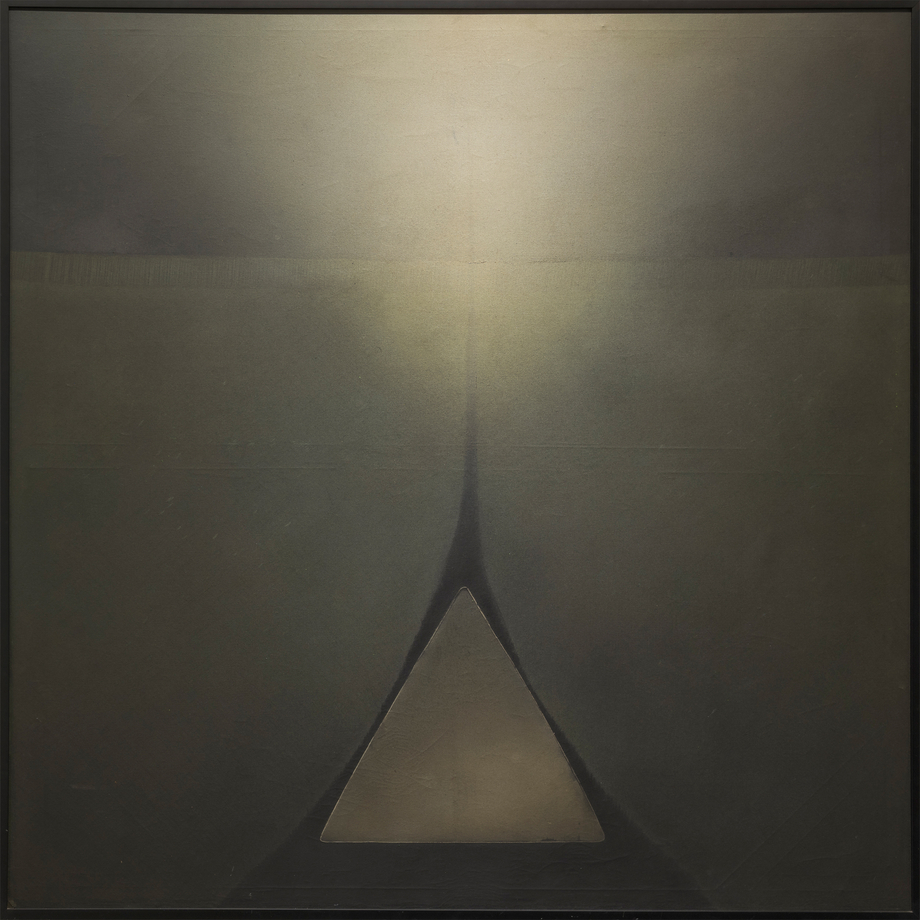
Badhan Das, Untitled, n/d, Acrylic on canvas, 59 ¾ x 59 ½ in (151.8 x 151.1 cm)
DASBA001

Vijay Shinde, Untitled (Red Abstract), 1994, Oil on canvas, 29 x 26 ½ in (73.7 x 67.3 cm)
SHIVI002

Vijay Shinde, Untitled (rust border), 1993, Charcoal, ink, and watercolor on watercolor paper, 30 ¼ x 22 ⅖ in (76.8 x 56.8 cm)
SHIVI014

Vijay Shinde, Untitled (black, rust, yellow), 1991, Pastel, graphite, and watercolor on watercolor paper, 29 ⅖ x 21 ⅚ in (74.8 x 55.4 cm)
SHIVI017

Vijay Shinde, Untitled (red/white), 1988, Pastel and watercolor on watercolor paper, 21 ⅖ x 18 ⅖ in (54.5 x 46.7 cm)
SHIVI009

Vijay Shinde, Untitled (grey/blue), 1988, Graphite, chalk, and ink on watercolor paper, 21 ⅖ x 18 ¼ in (54.3 x 46.4 cm)
SHIVI007

Biplab Bijoy Dutta, Untitled (rising circle), n/d, Acrylic, ink, and watercolor on textured paper, 14 x 15 in (35.6 x 38.1 cm)
ANON001

Biplab Bijoy Dutta, Untitled (red rectangle), n/d, Acrylic, charcoal, sgraffito, and decoupage on textured paper, 14 ¼ x 15 ¼ in (36.2 x 38.7 cm)
ANON002

Biplab Bijoy Dutta, Untitled (black vertex), n/d, Acrylic, Ink, Watercolor, decoupage on paper, 14 ½ x 15 ¼ in (36.8 x 38.7 cm)
ANON003

Biplab Bijoy Dutta, Untitled (pink triangle over black rectangle), n/d, Acrylic, ink, pastel, charcoal, sgraffito, and decoupage on textured paper, 12 ¾ x 14 ½ in (32.4 x 36.8 cm)
ANON004
Aicon Art is pleased to announce Tantra + Sufism, an exhibition that delves into the intricate and often-overlooked connections between two profound philosophical and artistic movements. While originating from distinct religious traditions, both Tantric and Sufi practices resonate deeply with shared themes of spirituality, symbolic language, and the pursuit of enlightenment. This exhibition invites viewers to reflect on these instances of syncretism, showcasing how artists from both traditions have crafted works that explore intersecting ideas of chakras, ritual movement, and the cyclical nature of life through vibrant symbolic representations. By examining how artists utilize symbolic language—such as triangles and ovoids in Tantra and earthy elements in Sufism—the exhibition reveals a unity that transcends cultural and religious origins. The exhibition features a remarkable collection from renowned Tantric artists G. R. Santosh, Prafulla Mohanti, Biren De, and Lancelot Ribeiro, alongside celebrated Sufi artists Sohan Qadri, Rachid Koraichi, and Safdar Ali Qureshi.
The Tantric artists featured in this exhibition bring distinctive approaches to exploring the spiritual. G. R. Santosh (1929-1997), a pioneering figure of Neo-Tantric art, is known for his vibrant color palette and innovative integration of geometric shapes. His work often reflects a metaphysical understanding of the universe, using intricate designs to symbolize the cosmos and glorify the feminine divine.
Prafulla Mohanti’s (b. 1936) captivating use of three circles represents Brahma, Vishnu, and Maheswar, the Trimurti, or the triple deity of supreme divinity in Hinduism. These three circles and deities embody the cosmic functions of creation, maintenance, and destruction. This drawing of the deities in their simplified form became Mohanti’s primary focus for several months, as he immersed himself in the purity of these circles, chanting their names as he worked.
Biren De’s (1926-2011) paintings feature symmetrical geometric patterns and incorporate Tantric symbols, including mandalas, phallic forms, and vaginal motifs, which symbolize the interplay of masculine and feminine energies within the universe. His work blended traditional Tantric elements with modern aesthetics, creating a dialogue that speaks to both the historical significance of these symbols and their relevance in contemporary society.
A recent rediscovery in the Neo-Tantric canon is the Indian-British artist, Lancelot Ribeiro (1933-2010). After a transformative six-month stay in India in 1968/69, during which he immersed himself in Tantric writings and philosophy, Ribeiro created richly colored, hard-edged geometric abstractions. Tantra + Sufism marks the first time these works have been exhibited in the United States.
The Sufi artists featured in the exhibition present their interpretations of spirituality through dynamic forms and narrative techniques. Sohan Qadri (1932-2011) adopted his last name from his Sufi teacher, Ahmed Ali Shah Qadri, as a sign of devotion. His figurative works shifted towards abstraction in pursuit of spiritual transcendence. “When I start on a canvas,” he stated, “first I empty my mind of all images. They dissolve into a primordial space. Only emptiness, I feel, should communicate with the emptiness of the canvas.” Qadri developed a methodology for his painting, dividing pure colors into three categories—dark, warm or cool, and light—allowing for a tripartite arrangement that could be organized in ascending or descending order, reflecting the spiritual energies and emotional vibrations inherent in each hue.
The color blue plays a significant role in the work of Rachid Koraïchi (b. 1947), symbolizing the ultimate unification of one with the divine. Koraïchi has developed a unique script that he describes as an ‘alphabet of memory,’ artfully melding Arabic script with personal codes to convey deep reflections on spirituality and coexistence. He often incorporates Sufi poetry by such seminal figures as Rumi and Ahmad al-Tijani into his paintings, prints and tapestries, offering an additional dimension to his unique visual language.
Safdar Ali Qureshi (b. 1980) began his artistic journey specializing in miniature painting but has since transcended those boundaries, developing his own distinct style characterized by narrow color palettes and abstract forms. His current works reflect memories and experiences, skilfully captured in swirling and overlapping layers, bridging the traditional with the contemporary.
Tantra + Sufism highlights the dynamic dialogue between these two artistic traditions, emphasizing their shared focus on spirituality and symbolism. Both Hinduism and Islam encourage seekers to explore paths towards enlightenment and divine connection, enriching the human experience in diverse ways. This exhibition celebrates the unity found within diversity, showcasing how the vibrant expressions of Tantric and Sufi art resonate with the universal quest for meaning and connection in the human experience.

